/CGLUX (Definitivo)-13.png)
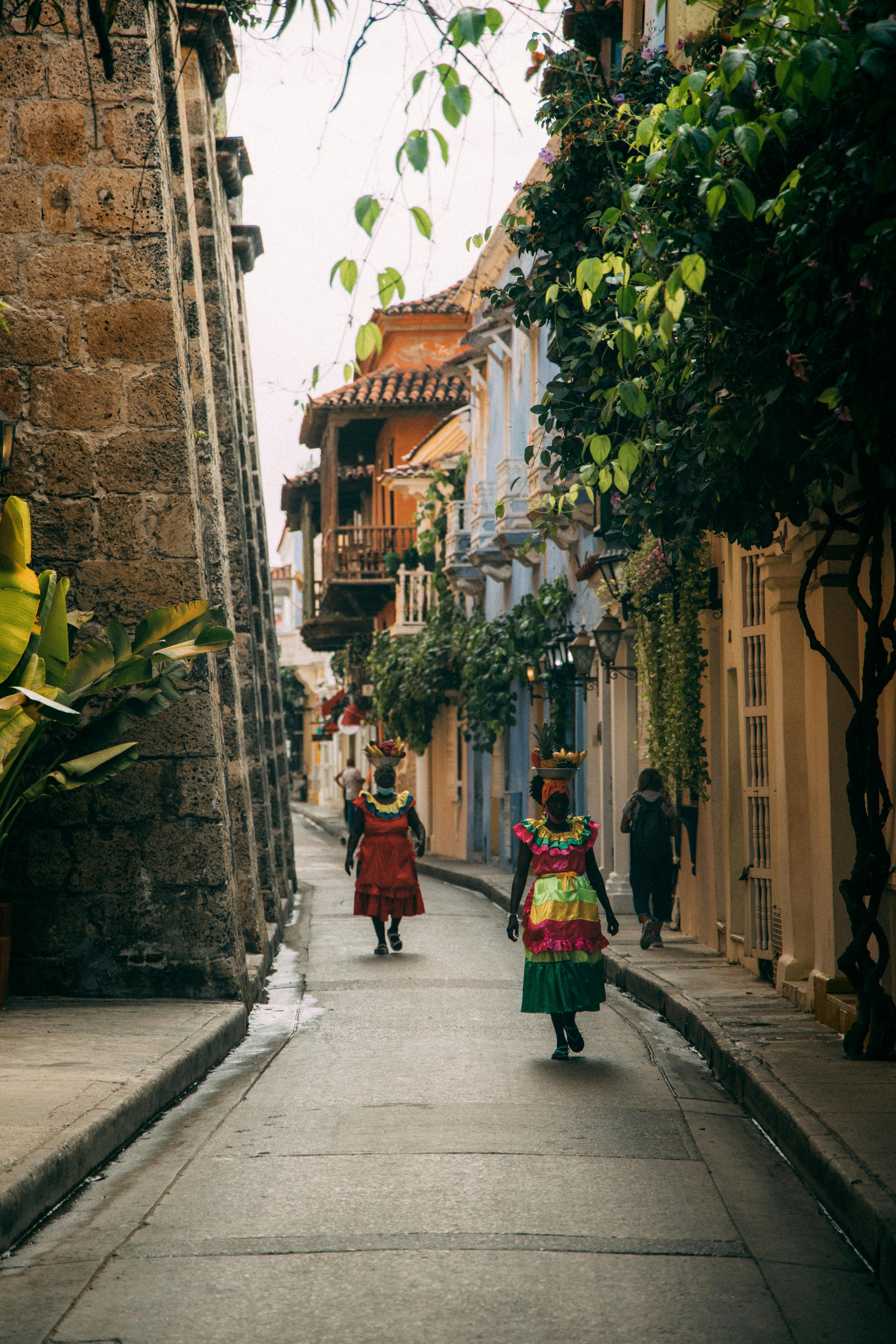
One of the most revealing things you can learn about a destination is not what it offers, but who it draws. Cartagena attracts a genuinely diverse international audience — far more varied than its reputation as a luxury destination might suggest — and understanding that diversity explains a great deal about why the city continues to grow in relevance year after year.
The largest source markets for international visitors to Cartagena are the United States, Canada, Spain, the United Kingdom, Mexico, and increasingly Brazil and Argentina. Within those markets, the profiles of who chooses Cartagena — and why — tell a more specific story.
North American Travelers — The Largest Market
American and Canadian visitors make up the single largest international segment in Cartagena's tourism economy, and the city has actively developed infrastructure to serve them. Direct flights from Miami, New York, Fort Lauderdale, and Toronto have made the journey increasingly accessible. The dry season window of December through March aligns conveniently with North American winter escapes, and the three-hour flight from Miami to Cartagena has become one of the most popular Caribbean-adjacent routes for travelers seeking something beyond an all-inclusive resort.
What North American visitors consistently report discovering in Cartagena is a depth that surprises them. They arrive expecting beaches and colonial architecture. They find those, and also a city that operates on its own terms — with its own music, its own food culture, its own pace — that rewards genuine curiosity rather than passive consumption.
Honeymooners and Couples
Cartagena has become one of the premier honeymoon destinations in Latin America, and the reasons are structural rather than merely aesthetic. The city offers the combination that honeymoon travel demands: genuine beauty, a manageable scale (you can cover the old town comfortably on foot), a high density of excellent restaurants, and an atmosphere that is romantic without being manufactured.
The colonial architecture helps — there is something genuinely cinematic about an evening walk through the walled city, dinner in a candlelit courtyard, a late-night arrival back to a hotel room that occupies the upper floor of a 300-year-old mansion. The backdrop does most of the work. What private concierge services add is the removal of friction: the reservations made, the car waiting, the yacht arranged for tomorrow morning, the experience flowing rather than being assembled piece by piece.
Cartagena also offers something many honeymoon destinations do not: the sense that you are in a real city rather than a resort enclave. The cultural richness — the hidden courtyards, the street life, the music that drifts from open windows in Getsemaní — gives the city a layered quality that rewards extended attention rather than exhausting it.
Luxury and High-Net-Worth Travelers
The luxury segment has grown faster than any other in Cartagena over the past decade, driven by the conversion of historic mansions into boutique hotels of international standard, the maturation of private villa rental as a category, and the emergence of a curated concierge ecosystem that can deliver experiences unavailable to the general travel market.
"The most sophisticated travelers often choose Cartagena precisely because it is not a resort — because its beauty is embedded in a city that has been continuously lived in for five centuries."
High-net-worth visitors to Cartagena tend to have traveled widely and seek destinations that offer genuine distinction rather than manufactured luxury. Cartagena delivers both: the physical environment — its architecture, its water, its light — is genuinely extraordinary, and the infrastructure to support a high standard of experience has reached a level where it can compete with the best of the Caribbean and beyond.
Cultural Travelers and History Enthusiasts
Cartagena's status as a UNESCO World Heritage Site draws a substantial audience of travelers motivated primarily by history and culture. These visitors — typically well-educated, well-traveled, and from Europe and North America — come to understand the city's extraordinary layered past: the Spanish colonial project, the African slave trade that passed through Cartagena's port, the battles for independence, and the 20th-century cultural flowering that produced Gabriel García Márquez and one of the richest literary traditions in the Americas.
For this traveler, Cartagena is not primarily a beach destination. It is an archive — of architecture, of culture, of the collision between three civilizations that produced something genuinely new in the Caribbean. Private guided experiences that provide access to lesser-known historical spaces, introduce local scholars and cultural figures, and go beyond the surface narrative are increasingly sought by this segment.
Groups and Celebrations
Cartagena has emerged as one of Latin America's most sought-after destinations for milestone celebrations — milestone birthdays, bachelorette weekends, anniversary trips, and small-group friend gatherings. The city's combination of beautiful spaces, strong restaurant infrastructure, and Caribbean access makes it unusually well-suited for this type of travel.
The private villa market has been particularly important here: Cartagena's historic mansions, available for exclusive rental, provide groups with a level of privacy and character that hotel accommodation cannot replicate. A 10-bedroom colonial mansion in the walled city, staffed and catered, with access to a private rooftop — this is an experience with no equivalent in most of the Caribbean.
The Solo Traveler
A growing segment — and one that Cartagena serves unusually well — is the solo international traveler. The city's walkability, its human scale, the density of interesting things within a small geographic area, and its safety in the tourist zones make it accessible and rewarding for independent exploration in a way that larger cities in the region are not.
Solo travelers to Cartagena tend to be older (35+), professionally established, and seeking destinations that offer both cultural substance and the practical comfort of reliable infrastructure. They tend to be highly engaged with the local context — more likely to seek out local restaurants than hotel dining rooms, more likely to explore Getsemaní than to stay within the walled city — and they tend to be disproportionately likely to return.
What All of Them Share
Across every market and traveler profile, the common thread among Cartagena's international visitors is a preference for the genuine over the simulated. They choose Cartagena over a resort because they want to be somewhere with a history, a culture, a complexity. They may not arrive knowing exactly what that means — but they recognize it when they find it. And once found, it tends to bring them back.
/CGLUX (Definitivo)-12.png)